Split tunneling is one of the main features of VPN services, which can provide the ability to simultaneously use a secure connection for certain Internet resources and directly access other sites without the participation of a VPN. Thus, the user does not have to change the network settings and does not disconnect the VPN connection. For example, you can safely work with corporate applications or connect to a remote desktop via VPN, while viewing personal mail or social networks will operate directly, without encryption and speed limits. This hybrid connection scheme helps to effectively separate work and personal tasks.
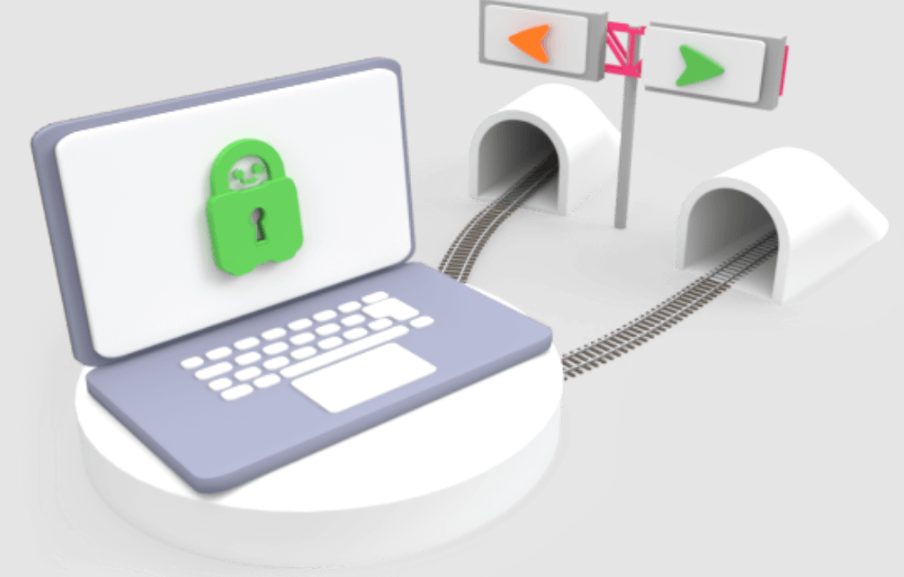
Types of split tunneling
You can configure split tunneling in various ways:
- For particular websites
- For specific applications
- For different devices
For instance, you might choose to use a VPN on your desktop computer while allowing your gaming console to connect directly to the internet. In this scenario, the VPN with split tunneling capabilities must be properly set up on your router or network gateway to function effectively.
There are several methods to set up split tunneling, depending on your needs:
- A secure VPN connection is applied only to a defined list of applications, websites, or devices that you select.
- By default, all data typically flows through the VPN tunnel, but you can designate certain websites, applications, or devices to utilize an unsecured connection instead.
- The VPN client—software that manages the secure connection—determines how to connect to various resources based on a collection of rules and policies at the moment a user attempts to access them. This approach to split tunneling is often referred to as dynamic split tunneling, giving you flexibility and control.
Advantages of Split Tunneling
Split tunneling provides the capability to:
- Conserve valuable VPN bandwidth effectively.
- Prevent bottlenecks that could arise when all traffic is routed through the VPN tunnel.
- Access speed-sensitive resources or local networks that may be unreachable while connected to the VPN, without needing to disconnect or disable it.
Split Tunneling Security
Using split tunneling for traffic distribution is certainly more secure than having no VPN at all, but it also introduces specific risks that users should be aware of.
Split tunneling enables users to evade the protective measures of a VPN—meaning that websites accessed directly will detect their actual IP addresses, which can compromise privacy. Corporate users can exploit split tunneling to sidestep company security policies and safeguards designed to protect sensitive information. If an employee connects directly to a harmful site from a remote device, the employer will remain completely unaware and unable to block access to that site. Moreover, the employer won’t know if sensitive data from the employee’s device is being sent to an external server, thereby bypassing the VPN entirely.
If split tunneling is misconfigured, it could mistakenly transmit confidential information through an unsecured channel, leading to potential data breaches and security vulnerabilities. Therefore, proper configuration and awareness of these risks are essential for maintaining security.