In the current landscape of escalating cyber threats and stringent regulatory demands, implementing multiple layers of defense against cyber risks has transitioned from a desirable option to an essential requirement. As a result, the concept of Defense in Depth has gained unprecedented significance.
Previously, we had the privilege of interviewing cybersecurity expert David Clark, where we explored the evolving strategies surrounding data storage solutions that incorporate encryption. Additionally, we sought his insights on the NIS2 Directive and the Digital Operational Resilience Act (DORA), discussing their implications for organizations navigating today’s complex digital environment.
In this follow-up conversation, we’ll delve deeper into David’s understanding of Defense in Depth as a critical framework and what organizations should aspire to achieve when crafting a robust, multi-layered cybersecurity strategy.
Clark’s extensive experience spans managing security for some of the world’s largest private trading networks, as well as overseeing one of Europe’s most prominent security operations centers. In this article, we present a summary of his key observations, along with the full video of this informative and engaging interview, providing valuable insights for professionals in the field.
Multi-level security — like armor for your business
Imagine that you are defending a fortress. There is a moat with water around, high walls, heavy gates, sentries on the towers. This is how defenses were built in the past. In the modern world, everything is the same, only we are not protecting stone walls, but data, systems and business processes. This is multi-level security — protection that works on several lines of defense to prevent threats from penetrating.
This strategy is not new — even in ancient times they understood: one barrier is good, but three or four are much more reliable. Today, this is expressed in a combination of antiviruses, firewalls, monitoring, procedures, regular updates and the human factor — yes, employees who know how to notice something suspicious in time.
Vulnerabilities: a sore spot that is better to know about in advance
The most dangerous thing is not the threat itself, but when you do not know about it. Any system accumulates vulnerabilities over time — this is normal. It is important not to bury your head in the sand, but to have a clear mechanism: identify — fix — draw conclusions.
Clark, an expert with experience in the financial sector, told an interesting story:
“Our system was not allowed to be down for more than 24 seconds a year. Not minutes — seconds! And no more than two per month. So we had to build an architecture where you can fix one thing while the rest continues to work.”
This is not just a beautiful quote — it is a way of thinking. You need to be able to quickly eliminate weak points without stopping the business. And most importantly, do not wait for a hack, but act proactively.
Risks are not scary. What is scary is not knowing where they are
If you approach security on the principle of “maybe it will pass”, then one day it will definitely not pass. That is why risk assessment is not a “checkbox” item, but a tool that helps you live more peacefully. You check where your vulnerabilities are and decide which of them are critical and which can be fixed a little later.
When risk management is built into your daily work, it is not stressful – it is helpful. You are not running around with a bucket, putting out a fire, but making sure that a spark does not appear in the first place.
Why all this really matters
Multi-layered security is not just a technical thing. It is a way to show clients and partners: “We care. We have provided. We have our finger on the pulse.”
In a world where every second news story is about hacks, leaks and attacks, those who know how to protect themselves command respect and trust. And with trust comes resilience: internal, business, human.
So multi-layered security is not about technology. It is about responsibility. About maturity. About respect for your business and for the people who trust you.
Why One Wall Isn’t Enough: The Power of Layered Security
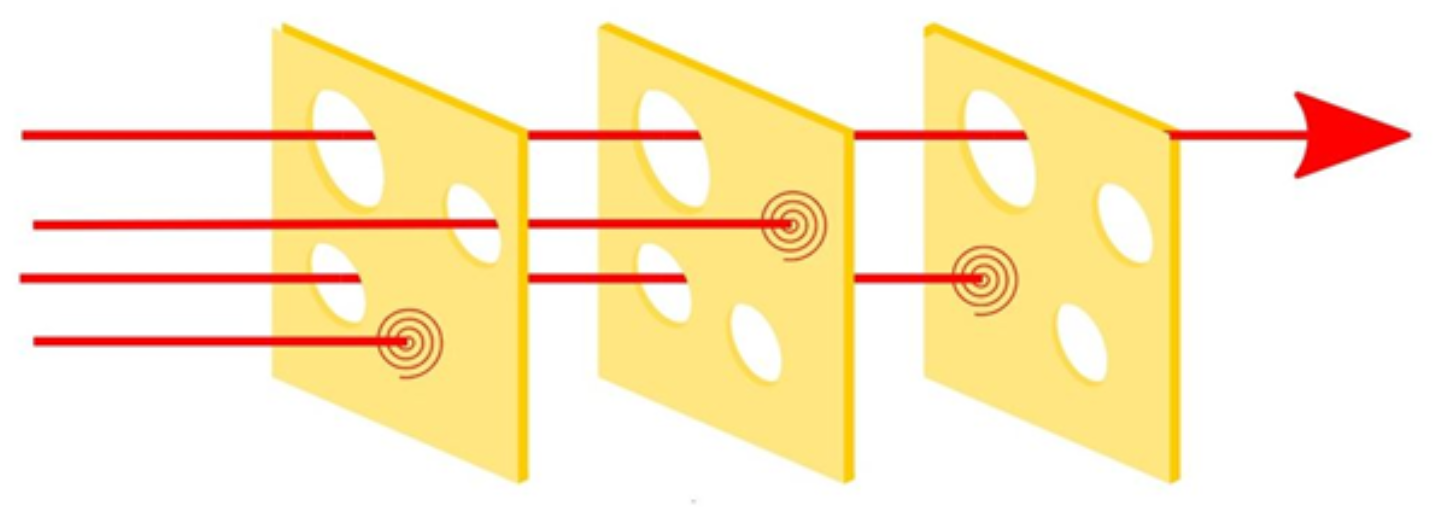
Clark makes a clear point: no single security tool is enough to keep threats out. Picture guarding a castle with just one gate—if that gate falls, the entire fortress is exposed. Depending on just one firewall works the same way. Instead, Clark suggests building several lines of defense—like using firewalls from different vendors—so if one layer fails, others are still standing. This approach lowers the chance of a total breakdown and helps protect your systems even when one barrier is breached.
Superusers: Gatekeepers or Risk Magnets?
Accounts with top-level access—so-called superusers—can turn into a company’s biggest vulnerability if compromised. Clark explains it bluntly:
“Once someone cracks a superuser, they can switch off logging, wipe the trails, grab your data—and you might not even know it happened. But with multiple layers of access control, especially for these accounts, breaking in becomes way more difficult.”
To reduce this risk, Clark recommends tightening the reins on privileged accounts. Think time-limited access windows, step-by-step authentication, and strict oversight. These controls don’t just block intruders—they also give you time to react if something goes wrong.
Human Firewalls: The Role of Employee Awareness
Even the best tech defenses fall short if the people behind them aren’t prepared. That’s why Clark highlights employee training as a cornerstone of good cybersecurity. Teaching staff how to recognize warning signs—and encouraging them to speak up—can be game-changing. When companies embed this into everyday culture as part of security hygiene, response times get faster and potential damage gets smaller. It’s not just a policy—it’s frontline defense in action.
Incident Response and Recovery
Clark highlights how crucial it is to have a clear, structured approach for handling and recovering from incidents. Companies must ensure that all team members know exactly what to do when something suspicious is detected. At the same time, key stakeholders need the ability to assess urgency, make quick decisions, and act effectively. A fast, well-coordinated response is essential to reduce the impact and get systems back up and running without delay.
Why Hardware Encryption Matters
Hardware encryption is a vital element in any defense-in-depth strategy. Clark explains that USB drives and external SSDs with built-in hardware encryption offer distinct advantages over software-based alternatives. He puts it simply:
“If your encryption is software-based, managed centrally, and it gets breached—then you effectively have no encryption left.”
The reason hardware encryption is generally more secure is because it doesn’t rely on software, which can be vulnerable to exploitation. Instead, the encryption process is handled by a dedicated, secure chip inside the device itself, completely isolated from the computer’s operating system. This separation makes it significantly harder for hackers or malware to compromise the data. Because of this extra layer of protection, devices with hardware encryption are far more resilient and dependable when it comes to keeping sensitive data locked down—even in high-risk scenarios.
Additionally, devices equipped with hardware encryption are specifically designed to withstand brute-force password attacks. If someone attempts to guess the access password for the storage device, this can trigger a protective feature known as cryptographic erasure. This feature wipes the entire drive clean, rendering all data inaccessible. This “always-active” mechanism, referred to as brute-force attack protection, adds a significant layer of security against potential physical threats.
Moreover, hardware-encrypted devices play a crucial role in helping organizations comply with various regulatory and legal standards. They showcase a firm commitment to maintaining data security, which is especially vital for industries that handle sensitive information. Sectors such as finance, healthcare, government, and supply chains are particularly at risk and thus require robust security measures. For instance, Kingston’s IronKey USB drives and external solid-state drives, which incorporate hardware encryption, provide reliable protection. This ensures that confidential data remains secure in accordance with established industry standards and regulations.
In particular, the Kingston IronKey D500S and Keypad 200 drives are expected to achieve FIPS 140-3 Level 3 certification. This certification gives organizations the assurance that their most sensitive information is safeguarded by military-grade encryption, as specified by NIST, the leading global authority on cybersecurity. For those who require high-capacity storage solutions, the Vault Privacy 80 external solid-state drives are certified to FIPS 197 standards and are available in several capacity options, reaching up to 8 TB. This provides a secure and effective method for backing up sensitive data, utilizing air gap techniques to further enhance security. Ultimately, the adoption of hardware-encrypted devices not only protects sensitive information but also builds trust with clients and stakeholders, reinforcing an organization’s reputation for reliability and security in an increasingly digital landscape.
Conclusion
Layered security represents a broad and multifaceted strategy in the realm of cybersecurity, covering several critical areas. This approach emphasizes the importance of multi-level protection, ongoing vulnerability management, strict supervision of superusers, and thorough training for employees at all levels.
Clark underscores the necessity of this strategy in defending organizations against the growing landscape of cyber threats, highlighting the vital role that hardware encryption devices play in this context. By implementing a comprehensive layered security strategy, organizations can significantly bolster their security measures, ensuring that they are better equipped to safeguard their essential data and critical systems from potential breaches and attacks.